You have a scar that bothers you. Maybe it’s from an accident, previous surgery, acne, or an injury. The scar is noticeable-raised, discolored, wide, or in a visible location on your face or body. It draws attention and affects your confidence. You’re self-conscious about the scar in professional settings, social situations, or intimate moments. You’ve tried creams, silicone sheets, and other treatments without meaningful improvement. You want the scar less noticeable or potentially removed entirely.
Dr. David N. Sayah is a board-certified plastic surgeon with fellowship training in advanced endoscopic techniques and over 15 years of experience specializing in procedures for men. Beyond his surgical credentials, his background as an accomplished oil painter and sculptor provides unique artistic insight into skin texture, color matching, and the subtle details that distinguish excellent scar revision from merely adequate results. His medical school education at UCLA David Geffen School of Medicine emphasized wound healing and tissue repair-knowledge he applies to every scar revision procedure.
Scar revision surgery encompasses various techniques to improve scar appearance through surgical excision and meticulous closure, laser treatments, steroid injections, dermabrasion, or other methods. The goal is creating scars that are less noticeable, flatter, better colored, and more aligned with natural skin lines. While scars cannot be completely removed or made invisible, significant improvement is achievable in most cases.
I absolutely love my skin thanks to Simply Males. I had significant sun damage and Dr. Sayah created a customized treatment plan that completely transformed my skin. I’m so happy with the results and finally feel confident again.
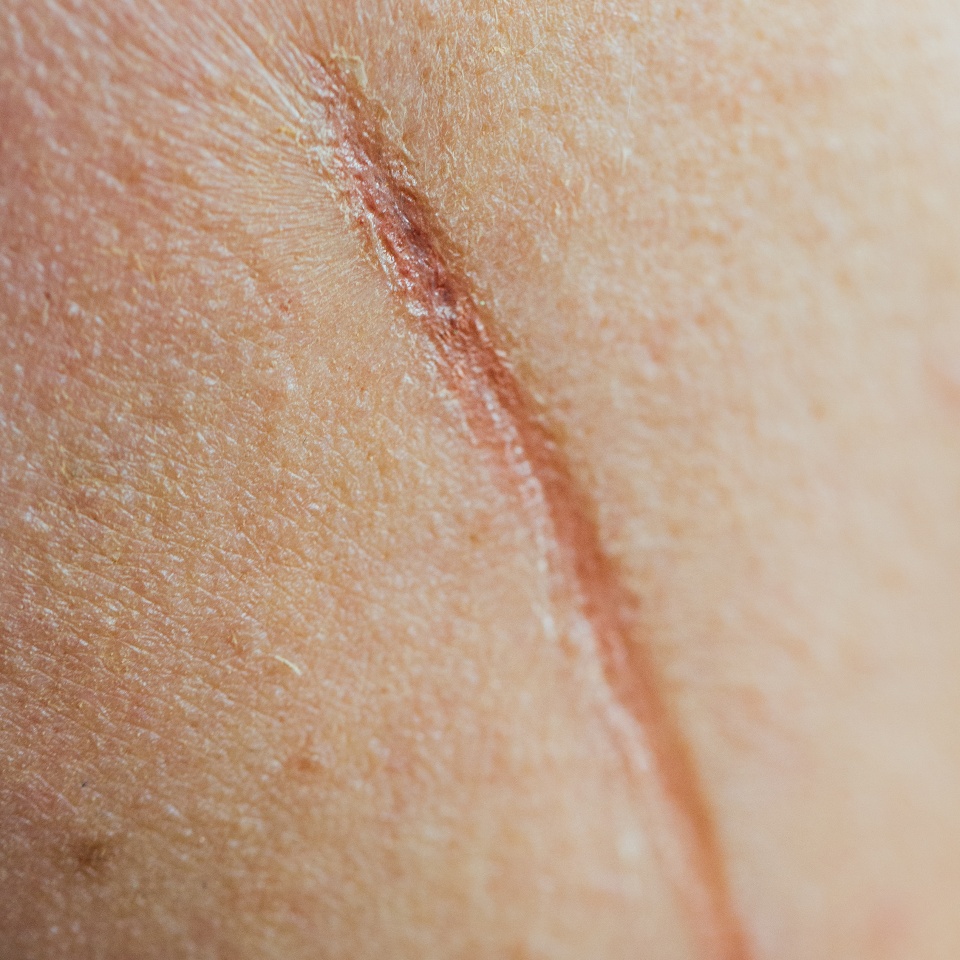
Understanding Scars and Scar Formation
Scars form as part of the body’s natural healing process after skin injury. When skin is damaged through trauma, surgery, burns, or other causes, the body repairs the injury by producing collagen fibers that reconnect damaged tissue. The resulting scar tissue differs in composition, texture, and appearance from normal skin-typically containing less elastin, fewer blood vessels, and differently arranged collagen.
Common scar types include hypertrophic scars (raised, red scars remaining within original injury boundaries), keloid scars (raised scars growing beyond original injury creating larger areas of scarring), atrophic scars (depressed scars below surrounding skin level, common with acne), contracture scars (tight scars restricting movement, often from burns), and wide or stretched scars (spreading beyond original incision from tension or poor healing).
Why Men Choose Scar Revision in Los Angeles
Men seek scar revision when scars affect their appearance and confidence:
Visible Facial Scars
You have noticeable scars on your face from accidents, previous surgery, or acne that draw attention and affect your confidence in professional and social situations.
Raised or Hypertrophic Scars
Your scars are raised, thick, and different in texture from surrounding skin, creating obvious appearance that bothers you.
Wide or Spread Scars
Scars from previous surgery or injury have widened and spread, becoming more noticeable than expected or desired.
Keloid Formation
Your scars have grown beyond the original injury, creating larger raised areas that continue expanding over time.
Poor Previous Closure
Previous surgery or injury repair resulted in suboptimal scarring from poor technique, inadequate closure, or complications.
Acne Scarring
Severe acne left depressed scars (ice pick, boxcar, or rolling scars) on your face affecting skin texture and appearance.
Body Scars
You have noticeable scars on visible body areas (chest, arms, back) from surgery, accidents, or previous procedures.
Professional Concerns
Your career involves client interaction, public speaking, or appearance-focused work where visible scars undermine professional image.
“Scar revision requires both technical expertise and artistic sensibility,” explains Dr. Sayah. “The goal isn’t making scars disappear-that’s impossible-but rather improving their appearance to make them less noticeable. My background as a painter and sculptor helps me understand skin texture, color matching, and the subtle visual characteristics that distinguish excellent scar revision from average results. My UCLA medical training emphasized wound healing at a cellular level, which informs my technique selection and approach. The best scar revision creates results that blend naturally with surrounding skin rather than trading one obvious scar for another.”
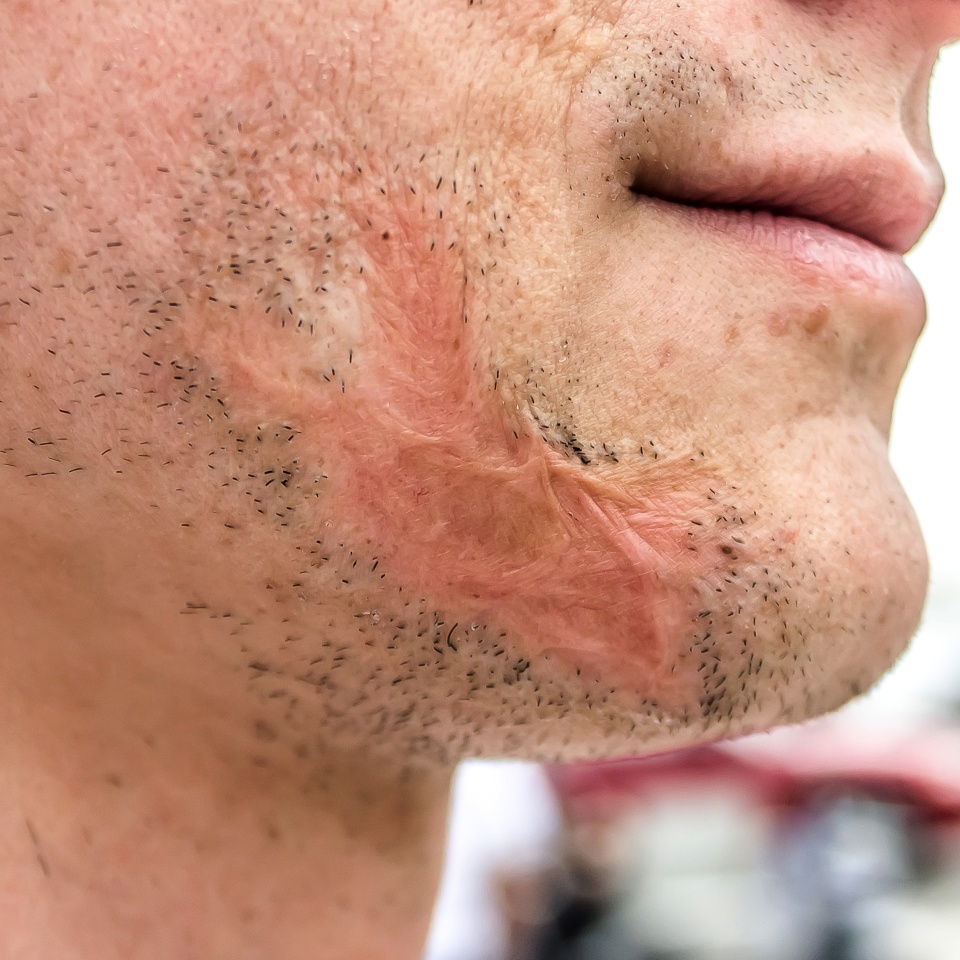
Male-Specific Scar Revision Techniques
Improving scar appearance requires customized approaches:
Surgical Scar Revision
For wide, raised, or poorly positioned scars:
- Scar Excision: Complete removal of the existing scar tissue down to normal skin layers.
- Z-Plasty Technique: Creating zigzag incisions that reorient scars along natural skin lines, breaking up straight scars into less noticeable patterns.
- W-Plasty Technique: Creating small triangular flaps that camouflage straight-line scars by creating irregular borders that blend better.
- Geometric Closure: Repositioning scar orientation to follow natural facial lines (relaxed skin tension lines) where scars are less visible.
- Layered Closure: Meticulous multi-layer closure technique minimizing tension and creating finest possible scar lines.
- Tension-Free Closure: Using deep sutures to eliminate skin tension, allowing superficial closure to heal with minimal scarring.
Laser Scar Treatment
For scar color, texture, and smoothness:
- Fractional CO2 Laser: Resurfaces scar tissue improving texture, reducing redness, and smoothing raised areas through controlled skin injury and remodeling.
- Pulsed Dye Laser: Targets red or purple scar discoloration by addressing blood vessels, fading scar color over multiple treatments.
- Erbium Laser: Provides gentler resurfacing for sensitive areas or less aggressive texture improvement.
- Combination Laser Therapy: Using multiple laser types addresses different scar characteristics simultaneously.
Steroid Injections
For raised and hypertrophic scars:
- Intralesional Corticosteroids: Direct injection into raised scar tissue flattens hypertrophic scars and prevents keloid growth.
- Serial Treatments: Multiple injection sessions every 4-6 weeks gradually reduce scar height and thickness.
- Combination Approach: Often combined with other treatments for optimal results.
Dermabrasion and Microneedling
For texture improvement:
- Dermabrasion: Mechanical removal of top skin layers smooths surface irregularities and improves scar texture.
- Microneedling with RF: Creating controlled micro-injuries stimulates collagen production, improving depressed scars and skin texture.
- Chemical Peels: Controlled chemical injury promotes new skin growth improving scar appearance.
Subcision and Filler
For depressed acne scars:
- Subcision: Releasing fibrous bands tethering depressed scars allows them to rise to skin surface level.
- Filler Injection: Temporary filler placed under depressed scars lifts them to surrounding skin level.
- Fat Grafting: Using your own fat as permanent filler for depressed areas.
What Scar Revision Improves
Scar improvement creates better appearance:
Raised Scars
Flatten hypertrophic and keloid scars creating smoother skin texture and less noticeable appearance.
Wide Scars
Narrow and refine wide or spread scars through surgical excision and meticulous re-closure.
Scar Color
Fade red, purple, or dark scar discoloration creating better color match with surrounding skin.
Depressed Scars
Elevate atrophic or depressed scars (common with acne) bringing them to surrounding skin level.
Scar Orientation
Reposition scars along natural skin lines where they’re less visible using Z-plasty or W-plasty techniques.
Texture Irregularities
Smooth rough or uneven scar texture through laser resurfacing, dermabrasion, or other treatments.
Contracture Scars
Release tight scars restricting movement or causing discomfort, particularly from burns.
Overall Appearance
Create less noticeable scars that blend better with surrounding skin and draw less attention.

The Scar Revision Procedure
Dr. David N. Sayah, who received his medical degree from UCLA David Geffen School of Medicine with emphasis on wound healing, performs scar revision procedures at his Beverly Hills practice:
- Consultation: Comprehensive scar evaluation determines optimal treatment approach based on scar type, location, and characteristics.
- Surgical Revision: Performed at our accredited surgery center under local or general anesthesia depending on scar extent. Duration varies from 30 minutes for small scars to several hours for extensive revision.
- Technique: Scar excision removing old scar tissue, strategic incision design using Z-plasty or W-plasty when appropriate, meticulous layered closure with fine sutures minimizing tension, and precise suture technique informed by Dr. Sayah’s artistic background creating finest possible scar lines.
- Non-Surgical Treatments: Performed in-office including laser treatments (multiple sessions typically needed), steroid injections (every 4-6 weeks for raised scars), dermabrasion or chemical peels, and microneedling with radiofrequency.
Recovery varies by treatment type-surgical revision requires 1-2 weeks, while non-surgical treatments have minimal downtime.
Scar Prevention and Optimization
Achieving best possible results:
- Post-Treatment Care: Following all wound care instructions meticulously, keeping incisions clean and protected, avoiding sun exposure on healing scars, and using recommended scar treatments (silicone sheets, gels).
- Realistic Expectations: Understanding scars cannot be completely removed or made invisible. Improvement rather than perfection is the goal. New scars replace old scars-improved but still present.
- Patient Factors: Not smoking (dramatically impairs healing), maintaining stable health, avoiding trauma to healing areas, and being patient-final results take 12-18 months.
Recovery After Scar Revision Surgery
Recovery depends on treatment type and extent:
Surgical Revision Recovery:
- First Week: Incision care is critical. Sutures typically removed at 5-7 days. Keep area clean and protected. Avoid tension on healing incision.
- Weeks 2-4: Incision line strengthening. Most activities can resume. Scar appears red or pink initially.
- Months 2-6: Progressive scar maturation and fading. Scar color transitions from red to pink to white. Texture smooths.
- Months 6-18: Continued scar maturation. Final appearance emerges over 12-18 months as scar fully matures.
Non-Surgical Treatment Recovery:
- Laser Treatments: Mild redness and swelling for 2-7 days. Multiple sessions needed. Progressive improvement over months.
- Steroid Injections: Minimal downtime. May feel tender for few days. Multiple treatments over months.
- Dermabrasion: Redness and sensitivity for 1-2 weeks. Gradual improvement over months.
Frequently Asked Questions About Scar Revision
-
No–scars cannot be completely removed or made invisible. All skin injuries heal with some scarring. The goal of scar revision is significant improvement making scars less noticeable, flatter, better colored, and better oriented–not complete elimination. When performed expertly by surgeons like Dr. Sayah using meticulous technique, scars can be improved dramatically to blend much better with surrounding skin. However, they remain present under close inspection. Setting realistic expectations about improvement rather than perfection is critical for satisfaction with results.
-
Scar maturation is a lengthy process taking 12-18 months for final appearance to emerge. Initial improvement is visible within weeks after surgical revision–the new incision line is typically finer and better positioned than the original scar. However, scars continue changing over months as collagen remodels. Scars typically appear most red and raised around 6-8 weeks, then gradually fade and flatten over the following year. Final scar appearance becomes apparent 12-18 months after revision when maturation is complete. Patience during this healing process is essential.
-
When performed by experienced surgeons like Dr. Sayah using meticulous technique, scar revision almost always creates improvement over the original scar. The new scar replaces the old one–but is typically finer, better oriented along natural skin lines, flatter, and less noticeable. There is theoretical risk that healing complications could create results no better or potentially worse than original scars, which is why proper surgeon selection is critical. Dr. Sayah’s artistic background and emphasis on tension-free, layered closure techniques minimize this risk substantially.
-
Insurance coverage varies. Purely cosmetic scar revision typically is not covered. However, scar revision may be covered when scars cause functional problems (contractures limiting movement, pain, or discomfort), result from accident or trauma rather than elective cosmetic surgery, or cause significant psychological distress documented by mental health professional. Our practice provides documentation for insurance consideration when circumstances exist supporting medical necessity. Coverage remains carrier and policy-specific.
-
Dr. Sayah’s qualifications for scar revision include board certification by the American Board of Plastic Surgery, UCLA David Geffen School of Medicine education with emphasis on wound healing and tissue repair, fellowship training in advanced surgical techniques, over 15 years of experience performing meticulous closures creating optimal scars, artistic background as painter and sculptor providing insight into texture and visual details, and published research experience understanding healing at cellular level. This combination of technical expertise, artistic sensibility, and scientific knowledge positions him exceptionally well for excellent scar revision outcomes.
-
Yes–depressed acne scars can be significantly improved through various techniques. Subcision releases fibrous bands tethering scars downward, allowing them to rise. Dermabrasion or laser resurfacing smooths skin surface irregularities. Microneedling with radiofrequency stimulates collagen production filling depressed areas. Filler injection or fat grafting provides volume under depressed scars. Combination approaches often work best for optimal improvement. Ice pick scars may require punch excision techniques. Dr. Sayah evaluates your specific acne scarring and recommends customized treatment plan for best possible improvement.
Why Choose Simply Males for Scar Revision in Beverly Hills
- Exclusive Male Focus: Dr. Sayah specializes exclusively in procedures for men, understanding male skin characteristics, healing patterns, and aesthetic preferences.
- Artistic Background: Dr. Sayah’s training as an oil painter and sculptor provides unique insight into skin texture, color matching, and visual details that distinguish excellent from average results.
- Wound Healing Expertise: UCLA David Geffen School of Medicine education emphasized wound healing science, informing technique selection and approach.
- Meticulous Technique: Layered closure methods, tension-free techniques, and fine suture work create optimal healing and finest possible scars.
- Natural Results Priority: Creating improved scars that blend naturally with surrounding skin rather than trading one obvious scar for another.
- Comprehensive Approach: Offering both surgical and non-surgical scar revision techniques, customizing treatment to each scar’s specific characteristics.
- Advanced Training: Board-certified by the American Board of Plastic Surgery with fellowship training in advanced surgical techniques completed at UCLA Medical Center. Over 15 years specializing in procedures for men.
- State-of-the-Art Facility: All procedures performed at our fully accredited surgical facility in Beverly Hills with highest safety protocols and latest laser technology.
Meet Dr. David Sayah
Dr David Sayah is a board certified plastic surgeon in Beverly Hills known for his natural approach to aesthetic surgery. With more than 26 years of experience, he combines surgical precision with artistic insight to deliver balanced and refined results. His philosophy centers on enhancing individual beauty rather than changing it.
A graduate of the UCLA School of Medicine and a Fellow of the American College of Surgeons, Dr Sayah trained at leading medical centers including NYU and UCLA. His work in wound healing and scar formation research helps patients heal beautifully with minimal scarring. Fluent in five languages, he welcomes patients from Beverly Hills, Los Angeles, and across the world who seek exceptional, natural results.
Schedule Your Scar Revision Consultation in Los Angeles
If scars from accidents, previous surgery, acne, or injuries are affecting your appearance and confidence, we can help. Dr. Sayah’s unique combination of surgical expertise, artistic background, and wound healing knowledge ensures you receive scar revision creating maximum possible improvement.
Contact Simply Males today at (310) 928-0920 to schedule your confidential consultation. We serve men throughout Los Angeles and Beverly Hills and welcome patients from around the world seeking expert scar revision and scar removal surgery.
Medically reviewed by David N. Sayah, MD, MD, FACS on