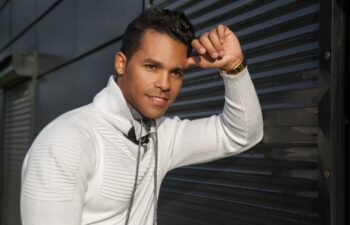
The men who walk into Simply Males for facial rejuvenation consultations are not who they were ten years ago. The demographic has changed — younger, more aware of their appearance, more informed about what’s available, and less burdened by the stigma that once made cosmetic surgery a conversation men had only in private, if at all. But the most significant change isn’t in who is coming in. It’s in what they’re asking for.
They’re not asking to look dramatically different. They’re not asking to look younger in an obvious, stated way. They’re asking to look like themselves — but like the version of themselves that matches the energy, the capability, and the confidence they feel internally. The gap between how they feel and how they look has become the problem they want to solve. And the surgical techniques that make that specific outcome possible have advanced significantly.
The Male Aging Face: What Actually Changes and Why
Understanding why men pursue facial rejuvenation requires understanding what aging does specifically to the male face — because the changes are different from what they are in women, and treating them effectively requires an approach built around that difference.
Male skin is thicker than female skin and has a higher collagen density, which means it ages differently — often more slowly in some respects, but with a characteristic pattern when it does change. The jowls that develop as the lower face descends tend to be heavier in men, creating a squaring of the lower face that erases the jaw angle definition that is one of the primary markers of masculine facial youth. The neck loses its angular definition — the sharp angle between the jaw and the neck that is visible in photographs of younger men becomes blunted and obscured by accumulating tissue. The skin develops a heaviness and looseness that reads as fatigue and age rather than the defined, angular quality that characterized the younger male face.
What most men want corrected is not the presence of lines or the general appearance of having aged — it’s the specific structural changes that make them look tired, heavy, or less commanding than they feel. That’s a surgical problem with a surgical solution.
Why Male Facelift Technique Is Different
The facelift that produces optimal results in a male patient is not the female facelift performed on a different face. It is a technically different procedure in several important respects that are specific to male anatomy and male aesthetic goals.
Male facial skin is heavier and less mobile than female skin, which changes how tension is applied and how much pull is required to reposition tissue. Male patients have facial hair — the bearded distribution of hair follicles in the lower face means that incision placement and skin movement must account for where hair grows, to prevent the repositioning of bearded skin onto non-bearded anatomical locations that would be immediately obvious. Male hairline patterns are different from female patterns, affecting where the temporal component of the incision can be placed without creating a visible scar in a hairless location.
And the aesthetic target is different. The male face ages toward a look that is heavy and soft. The rejuvenated male face should look angular, defined, and sharp — not smooth and soft in the way that a successful female facelift might appear. This means the surgical approach is oriented toward restoring jaw angle definition, sharpening the cervicomental angle of the neck, and creating the sharp structural quality that characterizes youth in the masculine face — rather than pursuing the softer, more rounded appearance that a female-oriented aesthetic approach might achieve.
Dr. Sayah’s technique in male facelift has been specifically refined around these male-specific anatomical and aesthetic requirements. His incision planning accounts for beard distribution. His tissue repositioning targets the angles and definitions that characterize the youthful male face. The result his patients experience is a face that looks rested, defined, and authentically their own — not a face that looks operated on or feminized.
Neck Rejuvenation: Often the Highest-Return Male Procedure
For men specifically, the neck is frequently the area where the first significant and most visible signs of aging accumulate — and it is also the area where surgical intervention produces the most dramatic improvement in masculine facial appearance.
The sharp cervicomental angle — the definition between the jaw and the neck — is one of the most consistent features of the photographically strong, masculine face. When it is erased by the accumulation of subplatysmal fat, loose neck skin, and descended tissue, the entire facial profile changes in a way that reads immediately as aging or weight gain even when neither has occurred significantly.
Neck rejuvenation — whether through liposuction alone in appropriate candidates, platysmaplasty to tighten the neck muscle band, or a comprehensive lower facelift and neck lift — restores this angle in a way that affects how the entire face reads. Before-and-after photographs of male neck rejuvenation cases consistently show the most dramatic transformation-per-procedure available in facial surgery, which is why Dr. Sayah includes neck assessment in every facial consultation regardless of what the patient came in to discuss.
What Men Worry About — and What the Actual Results Look Like
The most consistent barrier between a man and a facial rejuvenation consultation is the fear of looking done. Of looking like someone who has obviously had work. Of being recognized as having had a procedure in a way that draws more attention to the situation than the problem it was solving.
This fear is based on a specific and legitimate set of observations — the results of poorly executed or inappropriately calibrated facial procedures that produce a stretched, tight, or feminized appearance that reads as surgery rather than as the person at their best. These results exist. They come from female-oriented techniques applied to male faces, from excessive tension, and from surgeons whose aesthetic goal for a male patient is not sufficiently differentiated from their goal for a female patient.
They are not representative of what male facial rejuvenation looks like when it is done with the right technique, the right aesthetic calibration, and the right surgeon. The men who have had their facial rejuvenation performed at Simply Males do not look like they’ve had surgery. They look like they sleep well, they’re healthy, and they carry themselves well. That is the outcome that current male facial rejuvenation technique, in the right hands, consistently produces.
Schedule Your Consultation at Simply Males
Dr. David Sayah and the Simply Males team serve men throughout Beverly Hills, Los Angeles, and beyond from our Beverly Hills practice. Virtual consultations are available for men outside the LA area. Consultations are confidential, unhurried, and designed specifically for the male patient who wants honest information about what is possible and what it involves. Call (310) 928-0920 or visit simplymales.com to schedule. The version of your face that matches how you actually feel is closer than you think.
Posted on behalf of
436 North Bedford Drive Suite 202
Beverly Hills, CA 90210
Phone: (310) 928-0920